




Saham News
IHSG Outlook Today: Top Stock Recommendations for Tuesday, June 2, 2026
/index.php
Berita Terkini - Posted on 19 July 2025 Reading time 5 minutes
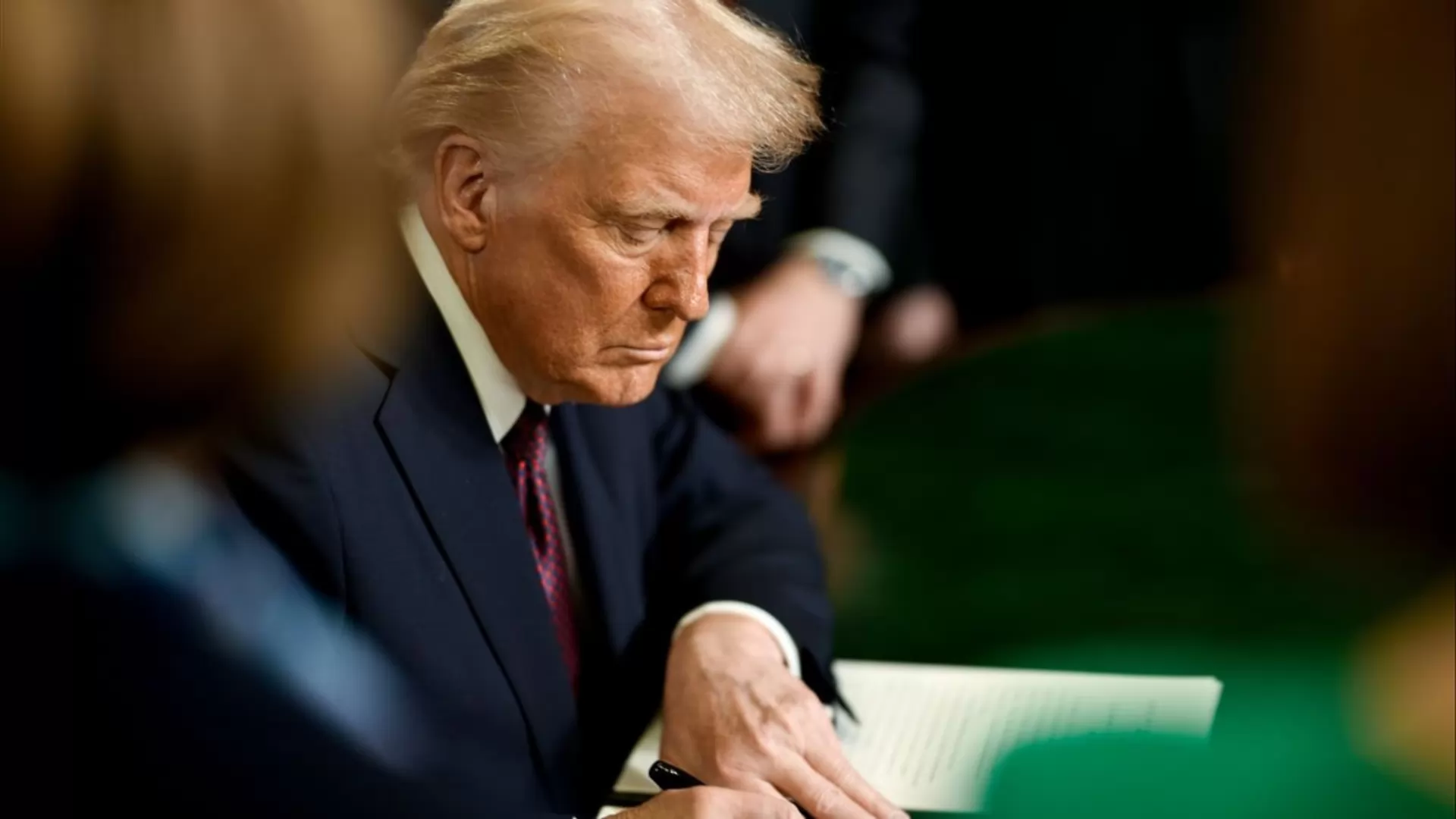
U.S. President Donald Trump confirmed this week the implementation of new import tariffs of 25% on Japan and South Korea, along with high tariffs ranging from 40% to 49% on several Southeast Asian countries. Indonesia was hit with a 32% import duty, followed by Malaysia at 25% and Thailand at 36%, effective August 1, 2025, according to reports from ING Think and Reuters.
However, the U.S. and Indonesia reached a special agreement that reduced the tariff to 19% through a bilateral trade deal.
The imposition of 25% tariffs has severely impacted Japan’s economy, which recorded a trade deficit of ¥2.2 trillion (~US$15 billion) in the first half of 2025. Exports to the U.S. plunged 11%, with the automotive sector shrinking by 25%, contributing to a 0.7% GDP contraction in Q1 2025.
The yen depreciated by 0.4% against the U.S. dollar, nearing its weakest level in a year, driven by domestic political uncertainty and failure to secure a tariff deal before the deadline, according to The Guardian.
Asian equity markets also came under pressure as rising protectionist sentiment triggered sell-offs across major indexes.
Tariff Negotiations: Indonesia successfully secured a 19% tariff rate after agreeing to purchase U.S. products worth tens of billions of dollars.
Regional Integration: ASEAN and RCEP are projected to act as buffers against protectionism, potentially boosting regional GDP by 1.9% and employment by 2.1% if internal commitments remain intact.
Production Diversification: Many global companies are relocating manufacturing bases from China to Vietnam and other Southeast Asian countries to mitigate tariff risks.
Goldman Sachs noted that while tariffs weigh on markets, policy certainty could reduce investor uncertainty in domestic sectors such as banking and telecommunications. However, North Asian economies—especially Japan, Korea, and Taiwan—remain highly vulnerable due to heavy dependence on the U.S. market.
| Risk | Impact |
|---|---|
| Further tariff escalation | Potential to trigger negative market rebound |
| Internal RCEP conflicts | Weakens the effectiveness of regional integration |
| Currency pressure | Adds burden on raw material import costs |
The new U.S. tariffs have created economic turbulence across Asia, weakening exports, worsening trade deficits, and fueling currency volatility. However, mitigation measures such as bilateral negotiations and supply chain diversification provide a path to medium-term stabilization.
The success of these strategies will depend heavily on RCEP’s internal cohesion, aggressive fiscal policies, and proactive responses from affected countries. Investors are advised to monitor tariff developments closely leading up to and after the August 1, 2025 deadline.
What do you think about this topic? Tell us what you think. Don't forget to follow Digivestasi's Instagram, TikTok, Youtube accounts to keep you updated with the latest information about economics, finance, digital technology and digital asset investment.
DISCLAIMER
All information contained on our website is summarized from reliable sources and published in good faith and for the purpose of providing general information only. Any action taken by readers on information from this site is their own responsibility.
SHARE
VIEW


