



News Update
US Warship Hit by Missile! Why Trump Pulled Troops & What It Means
/index.php
Bisnis | Ekonomi - Posted on 15 May 2025 Reading time 5 minutes
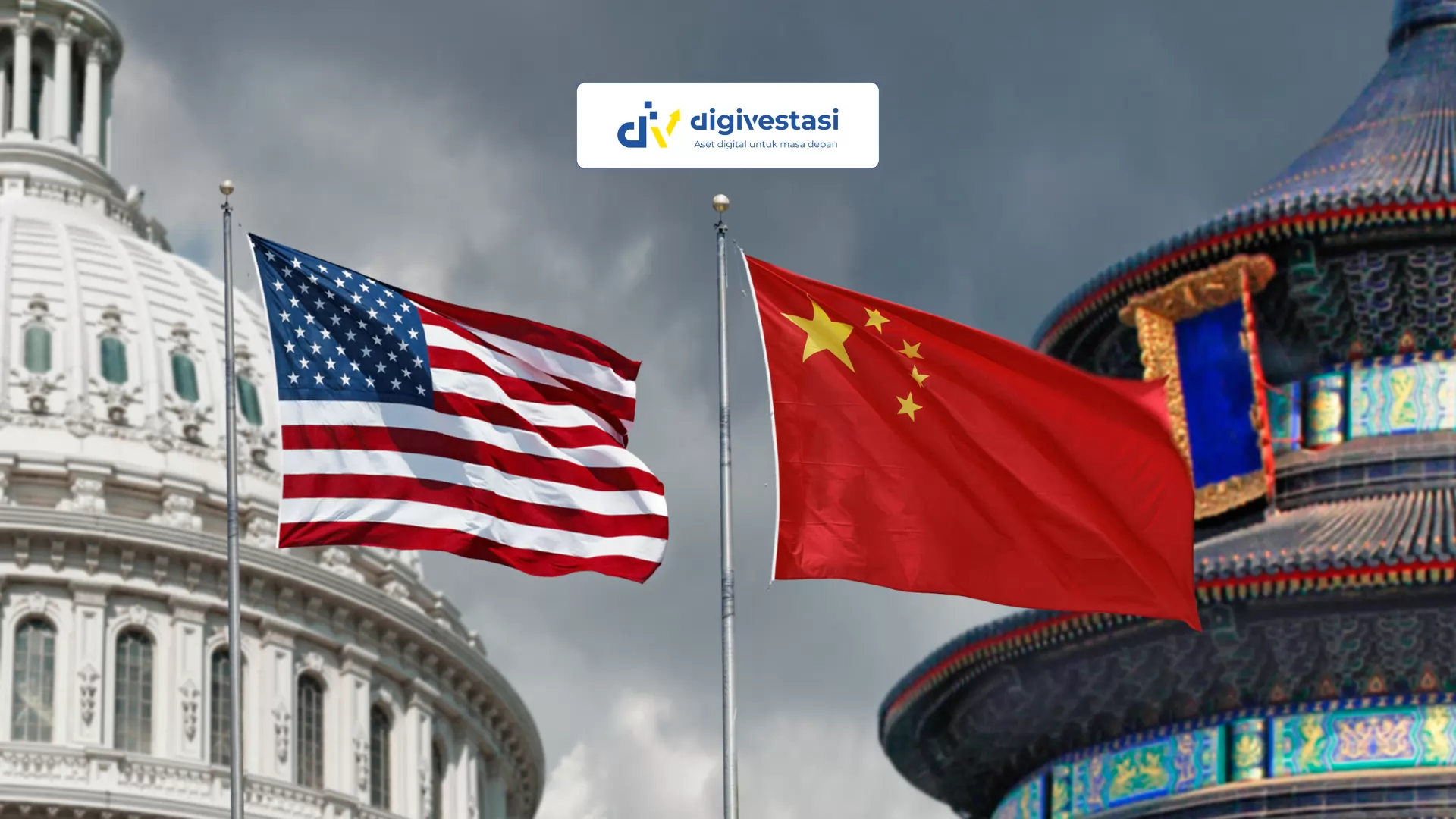
The United States (US) and China have agreed to temporarily reduce import tariffs for a 90-day period. This decision followed a meeting between representatives from both countries in Geneva, Switzerland, aimed at easing the prolonged trade tensions.
During the meeting, it was agreed that US-made products entering China would be subject to a 10% tariff, a sharp decrease from the previous rate of 125%. Meanwhile, goods exported from China to the US would be taxed at a 30% rate, down from the earlier 145%.
“We have reached an agreement on a 90-day pause and significantly reduced tariff levels. Both sides have agreed to a total reduction of 115%,” said US Treasury Secretary Scott Bessent, as reported by CNBC on Wednesday (May 14, 2025).
The 90-day grace period officially began on Wednesday (May 14). Both China and the US stated their intention to continue discussions on economic and trade policies during this timeframe.
The announcement brought optimism to investors. In the US, the Nasdaq futures index rose by 3.7%, the S&P 500 futures gained 2.7%, and the Dow Jones climbed more than 840 points, or 2%.
Oil prices also surged. Brent crude futures for July delivery, the international benchmark, rose by 2.7% to US$65.66 per barrel, while West Texas Intermediate (WTI) crude from the US increased by 2.9% to US$62.81 per barrel for the session.
Mark Williams, Chief Asia Economist at Capital Economics, described the trade truce as a major de-escalation. However, he warned that the agreement does not guarantee long-term peace in trade relations.
"In situations like this, there is no assurance that a 90-day truce will lead to a lasting resolution," Williams said.
Meanwhile, Tai Hui, Chief Market Strategist for Asia-Pacific at J.P. Morgan Asset Management, commented that the scale of the tariff reductions between the US and China was larger than expected. He stated that this move reflects a mutual acknowledgment that tariffs can hinder global economic growth, and that negotiations are the best path forward.
“Although 90 days may not be enough for both parties to finalize a comprehensive agreement, it still places pressure on the negotiation process,” Hui explained in a research note.
Hui also mentioned that investors are still waiting for more details on other trade-related terms, such as whether China will ease restrictions on rare earth exports.
Source: detik.com
What do you think about this topic? Tell us what you think. Don't forget to follow Digivestasi's Instagram, TikTok, Youtube accounts to keep you updated with the latest information about economics, finance, digital technology and digital asset investment.
DISCLAIMER
All information contained on our website is summarized from reliable sources and published in good faith and for the purpose of providing general information only. Any action taken by readers on information from this site is their own responsibility.
SHARE
VIEW


