




News Update
US Warship Hit by Missile! Why Trump Pulled Troops & What It Means
/index.php
Bisnis | Ekonomi - Posted on 15 May 2025 Reading time 5 minutes
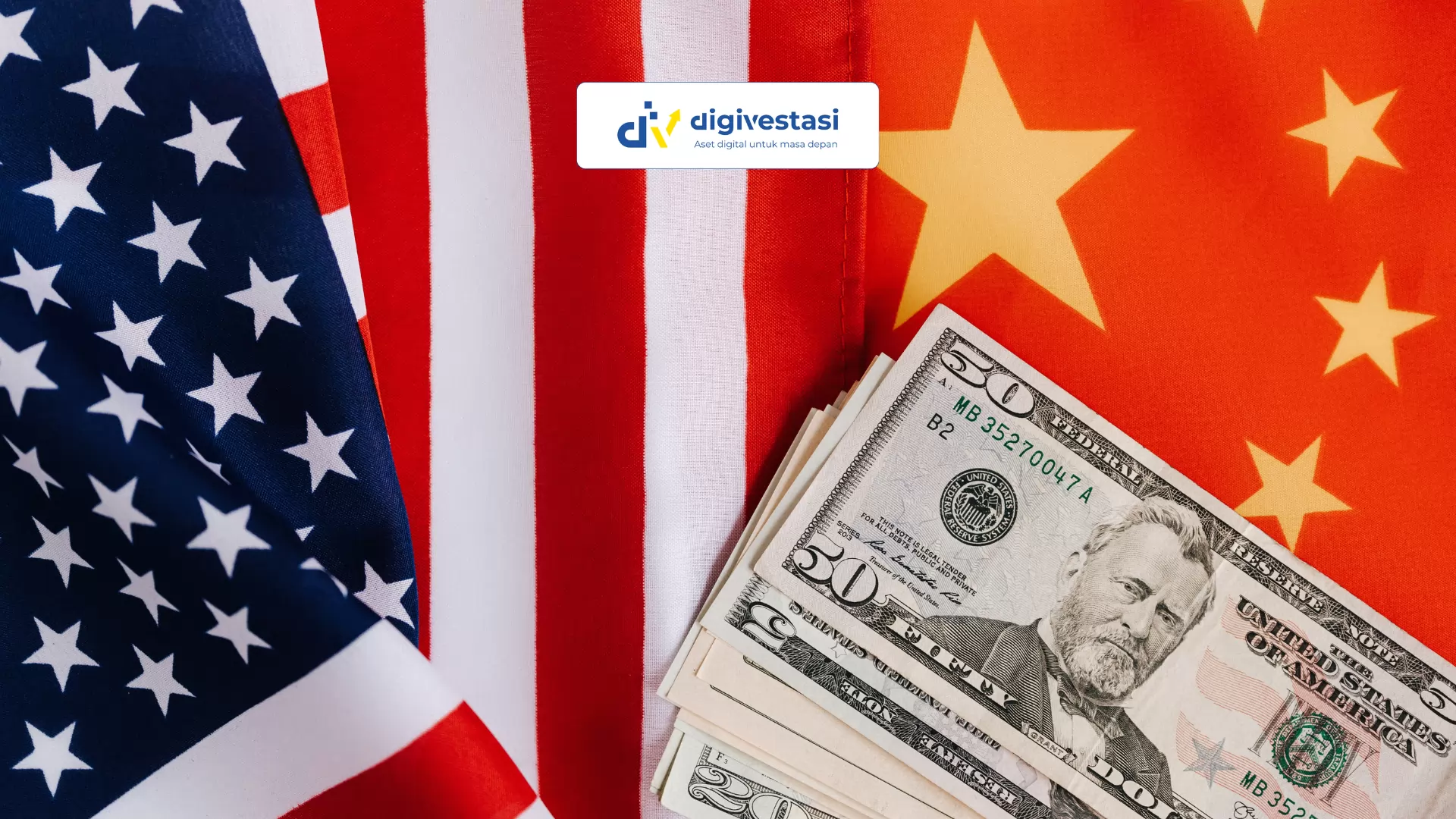
The recent decision by the United States and China to implement a trade war 'ceasefire' has helped to ease global economic concerns. This development is expected to bring positive sentiment while also presenting new challenges for the Indonesian economy.
Bhima Yudhistira, economist and Executive Director of the Center of Economic and Law Studies (CELIOS), noted that the agreement between the two major economies is likely to help restore the prices of Indonesia’s top export commodities.
This is aligned with rising industrial demand from China, which will likely support Indonesia's export performance as a whole. Additionally, the weakening of the rupiah has been relatively restrained.
"The pressure on the rupiah has been kept in check, which helps reduce the impact of imported inflation or the increase in prices of imported goods," Bhima told detikcom on Tuesday (May 13, 2025).
He added that the country's foreign exchange reserves have not been heavily depleted due to limited intervention in the currency market. At the same time, gold prices—often seen as a safe haven—have started to fall as concerns over geopolitical risk and a global recession begin to ease.
Meanwhile, currency market analyst Ibrahim Assuaibi believes the ceasefire has been a contributing factor to the decline in gold prices. The easing of geopolitical tensions, particularly between Israel and Palestine, has also played a role.
"This slight de-escalation in trade and geopolitical tensions has contributed to falling gold prices. Additionally, there’s a high chance that the U.S. Federal Reserve will discuss cutting interest rates in July," said Ibrahim in a separate statement.
However, he also predicted that the U.S. dollar will likely strengthen against other global currencies in the near future. He expects the decline in gold prices to be temporary, as the Russia-Ukraine conflict is still ongoing.
"The rupiah is likely to hover around Rp16,500 per U.S. dollar. Although global gold prices have corrected, they could rise again. The target of US$3,180 per troy ounce hasn't been reached yet, and prices are starting to rebound," he continued.
Ibrahim warned that the 90-day ceasefire may only offer short-term calm and does not eliminate the threat of global economic instability. He observed that investors are still exercising caution.
"The market remains on alert. For 90 days, no tariffs will apply, but after that, tariffs will be imposed—30% on Chinese exports to the U.S. and 10% on U.S. exports to China. This indicates the trade war isn’t over," he emphasized.
Bhima echoed similar concerns. He warned that lower tariffs for Chinese goods entering the U.S. compared to those from Indonesia could hurt Indonesia's export competitiveness. Indonesian products such as textiles, footwear, and garments might lose market share to Chinese goods. Indonesia, meanwhile, only stands to benefit from demand for raw materials and intermediate goods.
Regarding the risk of mass layoffs in labor-intensive sectors, Bhima explained that this will depend on how tariffs are applied to Indonesian exports. If Chinese tariffs are lower, manufacturing that had moved to Indonesia could shift back to China.
"Investments from the U.S. and Europe are increasingly flowing into China instead of to alternative countries like Indonesia. Indonesia’s investment realization continues to decline, as seen in the Gross Fixed Capital Formation (GFCF) contraction of -7.4% in Q1 2025 (q-to-q)," Bhima elaborated.
He suggested that Indonesia needs to be more assertive in negotiating with the U.S., possibly by leveraging the renewal of Freeport’s mining contract and the ongoing copper concentrate export relaxation that Freeport currently enjoys. Bhima also proposed that the South China Sea issue be brought to the negotiating table to pressure the U.S. into offering Indonesia more favorable tariff terms than China.
"So far, there are concerns that Indonesia’s tariff rate might remain higher than China's, which stands at 30%. Indonesia should also be on guard against an influx of imports from China, Vietnam, and Cambodia during this negotiation period. The biggest threat to jobs in labor-intensive sectors may not be export difficulties to the U.S., but rather fierce competition from imported goods," Bhima concluded.
Source: detik.com
What do you think about this topic? Tell us what you think. Don't forget to follow Digivestasi's Instagram, TikTok, Youtube accounts to keep you updated with the latest information about economics, finance, digital technology and digital asset investment.
DISCLAIMER
All information contained on our website is summarized from reliable sources and published in good faith and for the purpose of providing general information only. Any action taken by readers on information from this site is their own responsibility.
SHARE
VIEW


