




Digital Investment
Finance Minister Signals Bond Stabilization Fund Could Involve Finance Ministry SMVs-What Does It Mean?
/index.php
Berita Terkini - Posted on 08 May 2026 Reading time 5 minutes
The Police Reform Acceleration Commission (KPRP) officially completed its duties after submitting its recommendation report to President Prabowo Subianto on Tuesday (5/5/2026). Historically, the commission was established by Prabowo following the death of online motorcycle taxi driver Affan Kurniawan at the end of August last year. At that time, Affan was killed after being run over by a Brimob tactical vehicle deployed during a demonstration in Jakarta. Responding to public pressure, Prabowo formed the KPRP through Presidential Decree Number 122P of 2025 concerning the Appointment of Members of the Police Reform Acceleration Commission. Under the decree, former Constitutional Court Chief Justice Jimly Asshiddiqie was appointed as chairman of the commission. The remaining members included Mahfud MD, Yusril Ihza Mahendra, Supratman Andi Agtas, Otto Hasibuan, Tito Karnavian, National Police Chief General Listyo Sigit Prabowo, former Police Chief Idham Azis, former Police Chief Badrodin Haiti, and Presidential Special Advisor for Security and Police Reform Ahmad Dofiri. All KPRP members were inaugurated on Friday (7/11/2025). The commission was tasked with accelerating institutional reform, professionalism, and governance within the National Police.
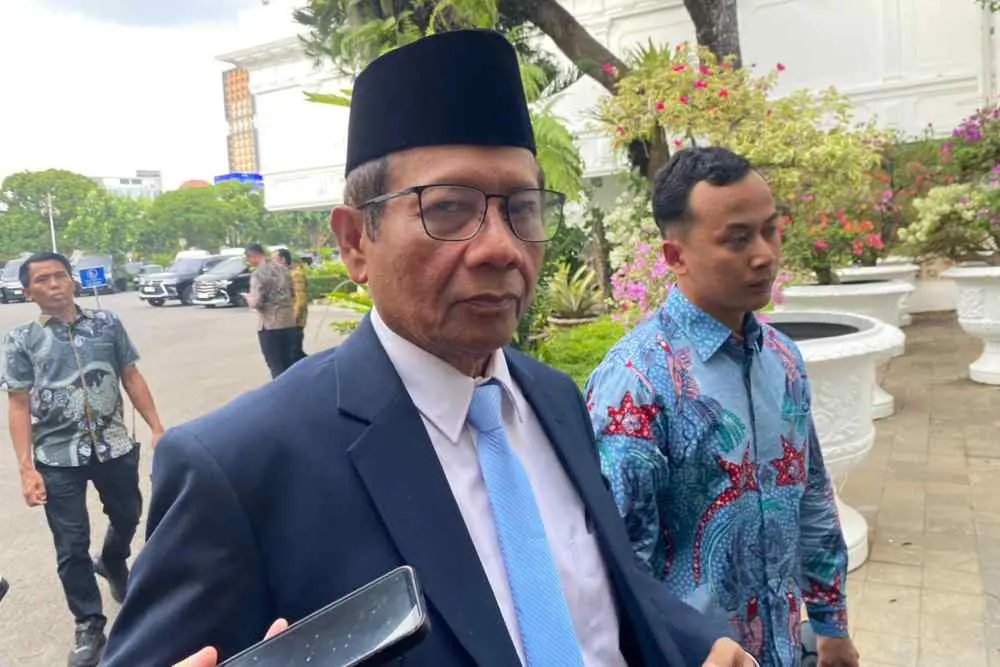
After its formation, Jimly and the other members immediately gathered input regarding the police institution from NGOs, community organizations, and student groups. Based on those findings, KPRP formulated a series of recommendations to be submitted to the President. According to Mahfud MD, the commission’s three months of work were compiled into 10 documents totaling around 3,000 pages, containing discussions, proposals, and recommendations regarding the direction of police reform until 2029. Once the report was delivered, KPRP’s duties were officially completed because the commission was ad hoc in nature and dissolved after finishing its mandate. However, Mahfud stated that the President might still invite the commission for future discussions arranged by the State Secretariat. “Our main task as an ad hoc body is finished. Later we may still be invited for discussions because the President considers this kind of arrangement important, and the State Secretariat will organize it. But essentially, our task is complete,” Mahfud said at the KPRP Secretariat in Jakarta on Wednesday (6/5/2026).
Broadly speaking, KPRP submitted six major recommendations to the President. First, it proposed drafting a new Police Bill as the foundation for reform, followed by derivative regulations such as government regulations, presidential regulations, presidential instructions, and revisions to internal police regulations. Second, KPRP recommended maintaining the current position of the National Police rather than placing it under a Ministry of Security as had previously been discussed. Third, the appointment of the Police Chief should remain under presidential authority with DPR approval. Other recommendations included evaluating police assignments outside the institution, reforming managerial and institutional aspects, and strengthening the National Police Commission (Kompolnas).
KPRP also addressed several strategic issues, including organizational structure and workflow reforms through strengthening local police sectors (Polsek) and streamlining Police Headquarters. This issue was considered important because the structure at headquarters was seen as excessively large, while local police offices, which serve as the closest level of public service, remained relatively weak. In addition, KPRP discussed improving career paths to create better institutional regeneration. Within that discussion, the ideal term for a Police Chief was estimated at two to three years. Proposals related to centralizing internal oversight were also highlighted. Currently, supervision is carried out by Itwasum, Propam, and Wasidik, but KPRP proposed expanding the authority of Itwasum to strengthen checks and balances mechanisms.
Another crucial aspect of police reform concerned recruitment, particularly the removal of the term “special quota,” which had often been misused for illegal levies. In the future, the criteria would be clarified and limited only to outstanding candidates or applicants from disadvantaged, frontier, and outermost regions. KPRP Secretary Ahmad Dofiri stated that cultural issues within the police institution became one of the most heavily discussed subjects in the report. He explained that KPRP focused on three major aspects: structural, instrumental, and cultural problems. From public aspirations gathered by the commission, KPRP identified nine negative behavioral patterns within the police, including a culture of violence, corruption, fanaticism, militaristic tendencies, impunity, the “silent blue code,” and target-oriented practices. “There are nine negative behaviors we identified from public aspirations, and all of them were accommodated in our report,” Dofiri said in Jakarta on Wednesday (6/5/2026).
To address those issues, KPRP recommended evaluating the police education system. According to Dofiri, the goal was to prevent negative behaviors from developing from the training stage until officers officially began serving. At the same time, strengthening Kompolnas became another central pillar of the reform agenda. Under the recommendations, Kompolnas would be granted broader authority, including conducting investigations into ethical violations by police officers and participating as judges in ethics hearings when necessary. Kompolnas recommendations would also become binding for the police institution. To strengthen independence, the commission’s membership would be expanded to include retired police officers, academics, inactive lawyers, and public figures. Kompolnas Commissioner Choirul Anam welcomed the proposal, stating that a stronger Kompolnas could improve oversight of police performance and professionalism.
National Police Chief General Listyo Sigit Prabowo explained that once the recommendations were received by the President, the police institution would begin implementing reforms through revisions to laws, Police Chief regulations, and police policies. According to Sigit, those improvements were part of the police response to the public input collected by KPRP. He emphasized that the police remain open to criticism in order to strengthen public trust in the institution. Sigit also highlighted the recommendation to strengthen Kompolnas as an external oversight body, describing it as an important area for future evaluation and institutional improvement.
However, Police Analyst from the Institute for Security and Strategic Studies (ISSES), Bambang Rukminto, argued that KPRP’s recommendations remained largely normative and had yet to touch on truly fundamental reforms. In his view, the recommendations focused more on governance restructuring rather than changing the power structure within the police institution. He particularly criticized the proposed strengthening of Kompolnas, arguing that it must become genuinely independent rather than merely serving as a formal channel to absorb public criticism. Bambang also noted that the recommendations failed to address deeper issues such as organizational culture, patronage systems, and the highly vertical orientation of power within the police.
According to Bambang, without reforms in career systems, promotions, and internal accountability mechanisms, limiting the Police Chief’s term would only become an administrative solution with limited impact. In addition, the decision to keep the police directly under the President reinforced executive consolidation of power. While this arrangement may provide clarity in command, it also strengthens an executive-centric policing model with limited external oversight. Bambang stressed that the main challenge of police reform lies in balancing institutional effectiveness with accountability. Without stronger accountability measures, the overall reform package risks remaining at a technocratic adjustment level rather than becoming a fundamental transformation in the relationship between the police, the state, and society. “If we ask whether the recommendations are comprehensive, then yes. But do they truly answer public expectations? Apparently not yet,” Bambang concluded.
Source: bisnis.com
What do you think about this topic? Tell us what you think. Don't forget to follow Digivestasi's Instagram, TikTok, Youtube accounts to keep you updated with the latest information about economics, finance, digital technology and digital asset investment.
DISCLAIMER
All information contained on our website is summarized from reliable sources and published in good faith and for the purpose of providing general information only. Any action taken by readers on information from this site is their own responsibility.
SHARE
VIEW


