


Saham News
Bank Central Asia (BBCA) Extends $17T IDR Loan to DCII Owned by Toto Sugiri-What's the Impact?
/index.php
Bisnis | Ekonomi - Posted on 01 March 2025 Reading time 5 minutes
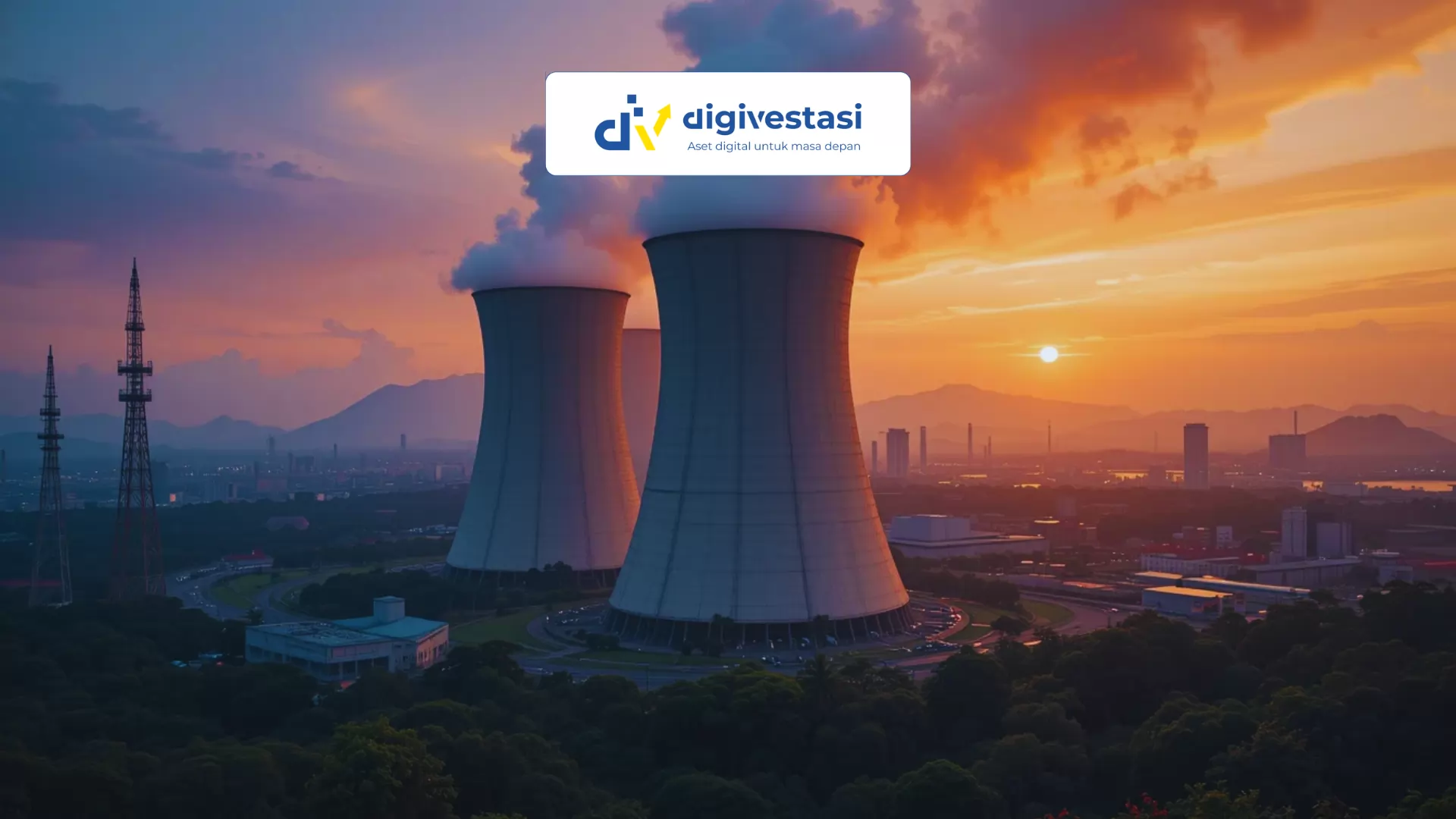
The Indonesian government has set an ambitious target to establish its first Nuclear Power Plant (NPP) by 2032. Although this is not a new initiative, the project has faced setbacks for decades. However, the plan gained momentum in the final years of President Joko Widodo’s (Jokowi) administration.
To kickstart the initiative, Jokowi appointed Luhut Binsar Pandjaitan as the Chairman of the Nuclear Energy Program Implementation Organization (NEPIO). This plan is now being carried forward under President Prabowo Subianto’s leadership. The Ministry of Energy and Mineral Resources (ESDM) confirmed that preparations are underway, with the NPP expected to be operational by 2032.
“The nuclear power infrastructure development is currently in its first phase, which involves consideration before formal establishment,” stated Eniya Listiani Dewi, Director General of Renewable Energy and Energy Conservation (EBTKE) at ESDM, during a parliamentary meeting on Tuesday (Feb 18).
Eniya noted that this phase follows guidelines from the International Atomic Energy Agency (IAEA). Before operations can begin, the government must revise several regulations, including formally establishing NEPIO.
Indonesia plans to construct a 250 MW reactor using Small Modular Reactor (SMR) technology, which is more compact and efficient.
Energy analyst from Padjadjaran University, Yayan Satyakti, highlighted that nuclear power could offer a cost-effective energy solution. With uranium fuel lasting up to 40 years, nuclear power plants could reduce energy costs by up to 50% compared to coal-fired power plants.
However, Yayan raised concerns over safety risks. He warned that poor governance in nuclear plant operations could lead to catastrophic failures, citing the Chernobyl disaster as an example.
“The Chernobyl incident occurred due to corruption in reactor fuel procurement. Instead of using high-quality fuel, they opted for cheaper graphite-based materials,” he explained to CNNIndonesia.com on Thursday (Feb 27).
Yayan also expressed concerns about Indonesia’s governance capabilities. He warned that corruption and mismanagement could increase the risk of nuclear accidents.
Another major challenge is nuclear waste management. Disposal requires specialized storage facilities, which are costly to maintain. Yayan referenced the Fukushima disaster in Japan, which was triggered by an earthquake and tsunami in 2011.
“Japan has the best nuclear safety protocols in the world, yet it still suffered from a reactor meltdown. Indonesia, being disaster-prone, must establish a thorough risk mitigation plan,” he cautioned.
Fabby Tumiwa, Executive Director of the Institute for Essential Services Reform (IESR), opposed the NPP development, citing high costs and Indonesia’s lack of technological expertise.
Since Indonesia cannot yet produce SMR reactors, it would have to rely on foreign imports. Additionally, local expertise is insufficient, meaning foreign operators would be required to manage the facility.
“Once we build a nuclear power plant, we will become heavily dependent on the country supplying the technology,” Fabby warned.
He pointed out that Indonesia has vast renewable energy potential, estimated at 3,686 GW. According to the latest IESR study, 333 GW from 632 renewable energy projects are financially viable, including solar, wind, and hydropower.
Unlike nuclear power, which takes years to develop, renewable energy solutions can be deployed more rapidly and cost-effectively.
“There is a 333 GW potential from solar, wind, and hydro energy that is technically feasible and economically viable,” Fabby concluded.
Source: cnnindonesia.com
What do you think about this topic? Tell us what you think. Don't forget to follow Digivestasi's Instagram, TikTok, Youtube accounts to keep you updated with the latest information about economics, finance, digital technology and digital asset investment.
DISCLAIMER
All information contained on our website is summarized from reliable sources and published in good faith and for the purpose of providing general information only. Any action taken by readers on information from this site is their own responsibility.
SHARE
VIEW


