






Crypto News
Revealed! Who Owns the Most Bitcoin in 2026? Shocking Data & Top Holders List
/index.php
Bisnis | Ekonomi - Posted on 12 September 2025 Reading time 5 minutes
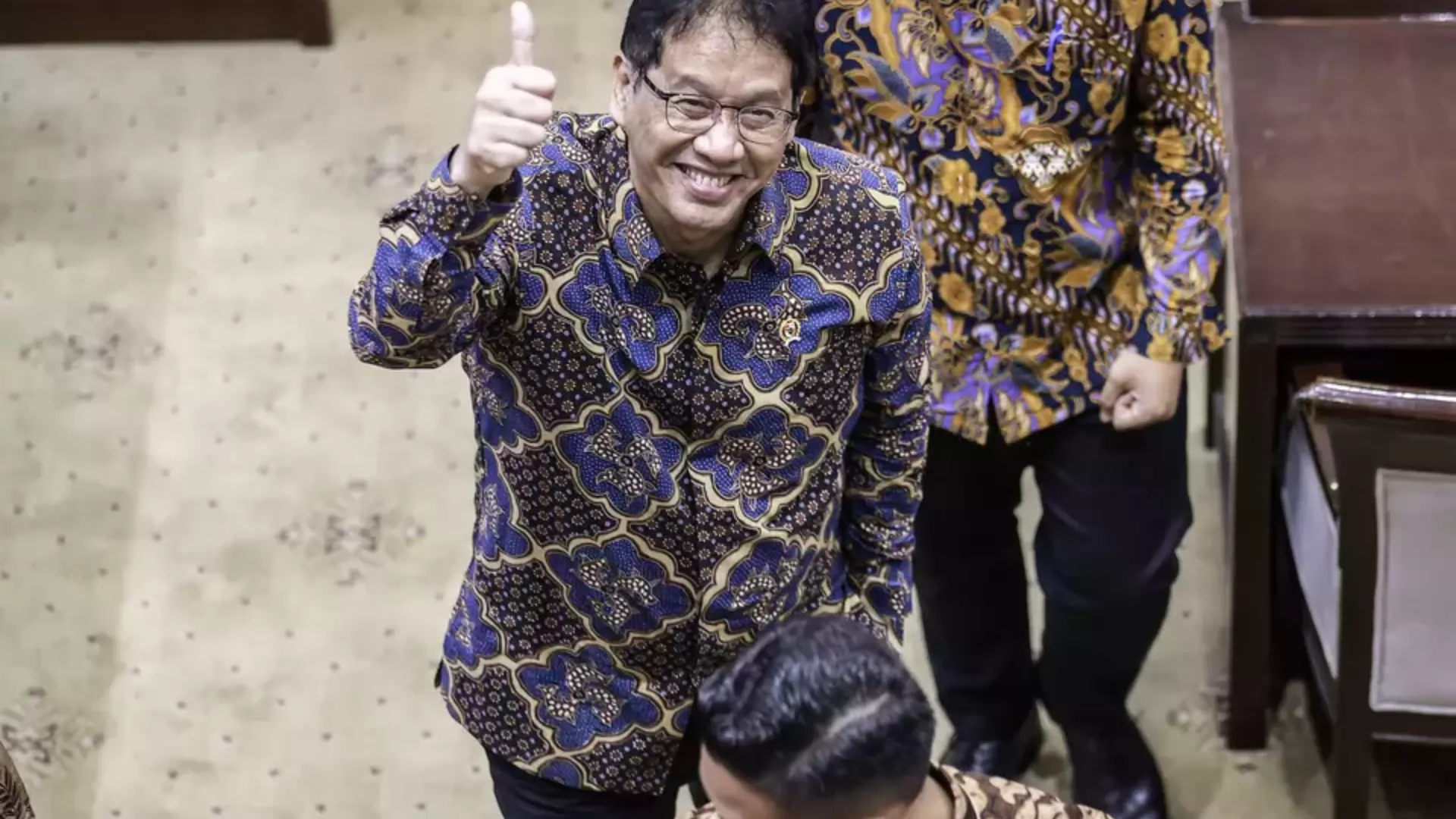
The wave of euphoria in Indonesia’s financial markets following the government’s announcement of a liquidity injection into state-owned banks (Himbara) has not been echoed by foreign investors. While domestic stocks and bonds surged sharply, global investors continued to cut their holdings of rupiah-based assets.
According to Bloomberg data, in the equity market, foreign net selling has persisted for eleven consecutive trading days. The selling spree, which began on August 27, has brought total foreign net outflows to US$3.72 billion, or Rp61.33 trillion, year-to-date as of September 11.
A similar trend is evident in the government bond (SBN) market. Based on Ministry of Finance data compiled by Bloomberg, foreign investors have been offloading SBN since the start of September. As of September 9, they had sold US$875.3 million worth, equivalent to Rp14.4 trillion.
Nevertheless, on a year-to-date basis, foreigners still recorded a net buy of US$3.76 billion, or Rp61.88 trillion.
In Bank Indonesia’s short-term hot money instrument, the Rupiah Securities (SRBI), the most recent data covering September 1–3 shows foreigners booked a net sell of Rp5.29 trillion. Cumulatively, until settlement on September 3, foreign investors had sold Rp103.38 trillion worth of SRBI this year.
Despite weak foreign appetite, domestic asset rallies remain intact. The Jakarta Composite Index (JCI) posted two consecutive days of gains after previously dropping due to the cabinet reshuffle. On Friday morning’s opening session, the index rose again by 0.92% to 7,819.
In the government bond market (SUN), yields fell significantly on Thursday: the 2-year yield dropped 4.6 basis points (bps), the 5-year plunged 8 bps, the 10-year eased 3.9 bps, and the 30-year slipped 2.7 bps.
Dollar-denominated Indonesian government bonds also rallied, with the 10-year and 30-year yields each declining 3.6 bps, while the 2-year fell marginally by 0.5 bps. The rally continued into Friday morning with 5-year yields down 2.1 bps and 10-year yields down 4.1 bps.
The rupiah also strengthened for three straight sessions, now trading at Rp16,395 per US dollar.
The absence of foreign participation in the rally is likely tied to doubts about the government’s policy approach. Many investors remain cautious, preferring to wait for clarity.
Finance Minister Purbaya Yudhi Sadewa’s move to place Rp200 trillion from the government’s excess budget balance (SAL) into state banks marks the largest liquidity injection of its kind in history.
Earlier this year, under former minister Sri Mulyani, only Rp16 trillion of SAL was placed in Himbara banks to fund low-interest loans for the Koperasi Merah Putih program and partly to support housing initiatives.
“Never before has SAL been transferred to banks on this scale. Withdrawing such large sums could reduce fiscal flexibility, since SAL serves as a contingency reserve for deficit coverage,” said Brian Lee, economist at Maybank Securities Pte., as quoted by Bloomberg News.
Even so, about Rp230 trillion in SAL remains, equal to roughly 1% of GDP.
On Thursday evening, Minister Purbaya signaled the possibility of revisiting the 2026 budget deficit target, previously set at 2.48%.
“There will certainly be some changes,” he told reporters at Parliament in Jakarta. “It could go up, it could go down,” he added.
Economist Irman Faiz argued that Purbaya’s liquidity injection policy risks fueling long-term inflation rather than driving real growth. “Liquidity is being flooded when demand remains weak. What rises is only asset prices,” he said.
Banking liquidity is actually still ample. BI Governor Perry Warjiyo, in the August Board of Governors meeting, noted that banks’ liquidity ratio (AL/DPK) was strong at 27.08% as of July 2025.
The concern is that surplus liquidity, with credit demand still subdued, could once again flow into SBN or SRBI. Purbaya, however, has warned banks not to channel the funds into bonds but to extend them to the real sector.
“The goal is for banks to hold more cash that must be converted into loans, not parked elsewhere. We are forcing market mechanisms to function,” said Purbaya.
Still, some economists argue that fiscal authorities should focus on their core roles—reallocation, redistribution, and macro stabilization through spending and taxation—rather than intervening in liquidity, which is under BI’s domain.
“The quick win is government spending. The main problem has been slow budget absorption and sluggish regional spending. Accelerating disbursement is key to ensuring the fiscal multiplier works. This could be done by adjusting KPIs for ministries and local governments,” Irman explained.
He added that extra liquidity would only boost growth if the real sector recovers. “Otherwise, as during the pandemic, the funds will end up back in SBN because banks won’t let cash sit idle,” he warned.
A contrasting view came from Trimegah Sekuritas Chief Economist Fakhrul Fulvian. “Purbaya could be called the Minister of Reflation; his banking liquidity boost is a delayed move,” he said.
For years, Indonesia’s economic growth has been restrained by contractionary financial policies tied to US dollar cycles and external factors, prioritizing stability over growth.
But today’s environment demands direct government support as purchasing power weakens and the economic engine falters. “Growth is happening, but the cycle isn’t turning, leaving many people excluded,” Fakhrul noted.
He defined reflation as a coordinated policy effort to raise economic activity and aggregate demand back to its proper level. This involves channeling large-scale spending into targeted sectors to create jobs and stimulate expansion.
Historical precedents include the US in the 1930s during the Great Depression, and Japan’s reflation under Abenomics.
Fakhrul stressed that after placing government funds in banks, the next step must be faster and higher-quality spending, especially on high-impact programs such as Free Nutritious Meals, Koperasi Merah Putih, housing projects, and more.
To ensure the stimulus reaches its target, he suggested incentives for labor-intensive industries, such as subsidies covering part of new employees’ wages. “This is crucial because many businesses are still in survival mode,” he concluded.
Source: bloombergtechnoz.com
What do you think about this topic? Tell us what you think. Don't forget to follow Digivestasi's Instagram, TikTok, Youtube accounts to keep you updated with the latest information about economics, finance, digital technology and digital asset investment.
DISCLAIMER
All information contained on our website is summarized from reliable sources and published in good faith and for the purpose of providing general information only. Any action taken by readers on information from this site is their own responsibility.
SHARE
VIEW


