




Crypto News
Revealed! Who Owns the Most Bitcoin in 2026? Shocking Data & Top Holders List
/index.php
Bisnis | Ekonomi - Posted on 14 August 2025 Reading time 5 minutes
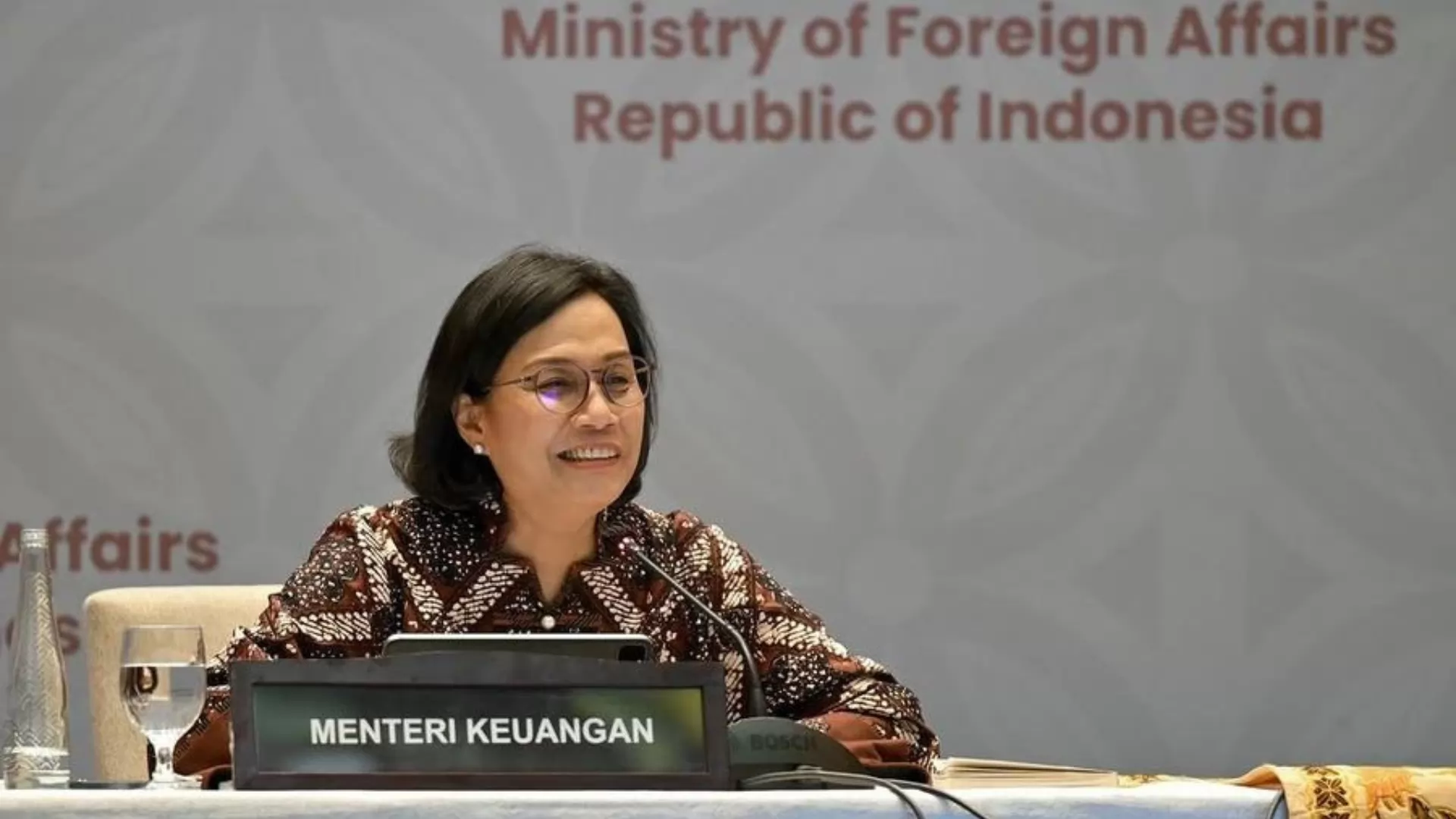
Minister of Finance, Sri Mulyani Indrawati, served as a speaker at the National Sharia Economic Gathering: Reflection on Indonesia’s Independence 2025, held on Wednesday, August 13, 2025.
In her speech, she stated that the obligation to pay taxes is similar to fulfilling zakat and waqf because all three share the same purpose: to distribute a portion of wealth to those in need.
She emphasized, “Essentially, those who are capable should utilize their abilities because within every blessing and wealth you possess lies the right of others.”
Sri Mulyani further explained that in the context of fiscal policy, taxes paid by the public are returned to society in various forms. These include social protection programs and subsidies, the benefits of which are directly felt by the community—especially those with low incomes.
She pointed out that the rights of others can be delivered through zakat, waqf, or taxes, and that taxes are returned to those who need them most. For instance, the government provides the Family Hope Program to 10 million underprivileged families and additional food assistance to 18 million families.
In addition, the government delivers various healthcare services, including diagnostic facilities, free medical treatment, and free health checks, along with the construction of healthcare access points such as community health centers (puskesmas), BKKBN offices, posyandu, and improved hospitals in different regions.
In the education sector, the government has started opening public schools for citizens who cannot afford formal education. “All of this is the right of others taken from the sustenance you possess,” she noted.
In agriculture, the government provides fertilizer subsidies to farmers most in need, supplies agricultural machinery (alsintan), seeds, and supports land expansion. She explained that these measures serve as state budget instruments to achieve justice, which in essence aligns with sharia economic principles.
The Importance of Transparency in the Economy
Sri Mulyani warned that managing the economy without transparency opens the door to numerous temptations to act dishonestly regarding entrusted responsibilities.
“Managing the economy without transparency will inevitably invite many ‘syaiton nirojim.’ Communicating openly is, in my view, a way to ensure we remain on an honest path,” she said.
She added that transparency in managing state finances is also an example of the Prophet Muhammad’s quality of Tabligh, meaning delivering or openness.
Overall, she explained that there are four qualities of Prophet Muhammad SAW that can serve as the foundation for good governance: Siddiq (honesty), Amanah (trustworthiness), Tabligh (communication), and Fathonah (wisdom/intelligence).
“The four characteristics of the Prophet, if expressed in modern terms, are what we now call good governance. Too often, we only speak of the sharia aspect, forgetting that the foundation of every aspiration lies in the character of those who carry it out,” she said.
She stressed that two qualities most often compromised in building a sharia-based economy are Siddiq and Amanah. Without integrity, managing funds—whether as little as Rp1 million or as much as Rp3,800 trillion in the state budget—can harm the people who need them the most.
“If you lack and fail to maintain honesty and trustworthiness, you will not only damage the ideals of Islam but also wrong those who most deserve our protection,” she emphasized.
Meanwhile, the quality of Fathonah, or intelligence, is highly important in today’s fast-paced technological era, including in facing modern warfare threats that rely on advanced technology.
“The world is changing rapidly. Many predict that in the next 10 years, the world will transform significantly due to technology. We can already see the difference in today’s warfare compared to the past. In the old days, battles were fought soldier against soldier on the front lines, such as in World War II or the Vietnam War. Now, it is drone versus drone,” she concluded.
Source: cnbcindonesia.com
What do you think about this topic? Tell us what you think. Don't forget to follow Digivestasi's Instagram, TikTok, Youtube accounts to keep you updated with the latest information about economics, finance, digital technology and digital asset investment.
DISCLAIMER
All information contained on our website is summarized from reliable sources and published in good faith and for the purpose of providing general information only. Any action taken by readers on information from this site is their own responsibility.
SHARE
VIEW


