





Crypto News
Revealed! Who Owns the Most Bitcoin in 2026? Shocking Data & Top Holders List
/index.php
Bisnis | Ekonomi - Posted on 18 August 2025 Reading time 5 minutes
President Prabowo Subianto’s administration is forced to adopt a borrow-to-pay strategy to maintain fiscal stability amid declining tax revenues, rising debt ratio risks, and the swelling allocation for interest payments. According to the 2026 State Budget Financial Note (RAPBN), the government has allocated Rp599.4 trillion for debt interest payments, an increase of 8.56% compared to the 2025 outlook of Rp552.1 trillion.
This amount accounts for 17.8% of central government spending in the 2026 budget, which totals Rp3,136.5 trillion. Although the allocation has grown, both the growth rate and its share in central spending are actually lower than in the past three years. For instance, in the 2025 budget, the allocation reached Rp552.1 trillion, growing by 11.5% and consuming 20.4% of central government spending. Nevertheless, debt interest payments remain one of the most dominant budget items in 2026, surpassing both subsidies (Rp318.9 trillion) and social spending (Rp167.36 trillion).
The large portion of interest payments and a still-deficit primary balance push the government to issue new debt next year, mainly to cover interest and principal repayments. The government plans to raise Rp781.9 trillion in 2026, the highest borrowing level since the pandemic. Historically, during the Covid-19 crisis, borrowing peaked at Rp870.5 trillion in 2021, before falling to Rp696 trillion in 2022, Rp404 trillion in 2023, Rp558.1 trillion in 2024, and Rp715.5 trillion in the 2025 outlook. In its budget documents, the government argues that fiscal policies, including new borrowing, are designed to achieve two main objectives: mitigating global volatility while sustaining development goals. It also emphasized that debt management would remain prudent, accountable, and controlled to ensure fiscal sustainability.
To support this, the government outlined three debt management principles: first, acceleration, using debt as a catalyst to spur growth; second, efficiency, by minimizing borrowing costs through financial market deepening and diversifying instruments; and third, balance, by optimizing the debt portfolio with minimal costs and tolerable risks.
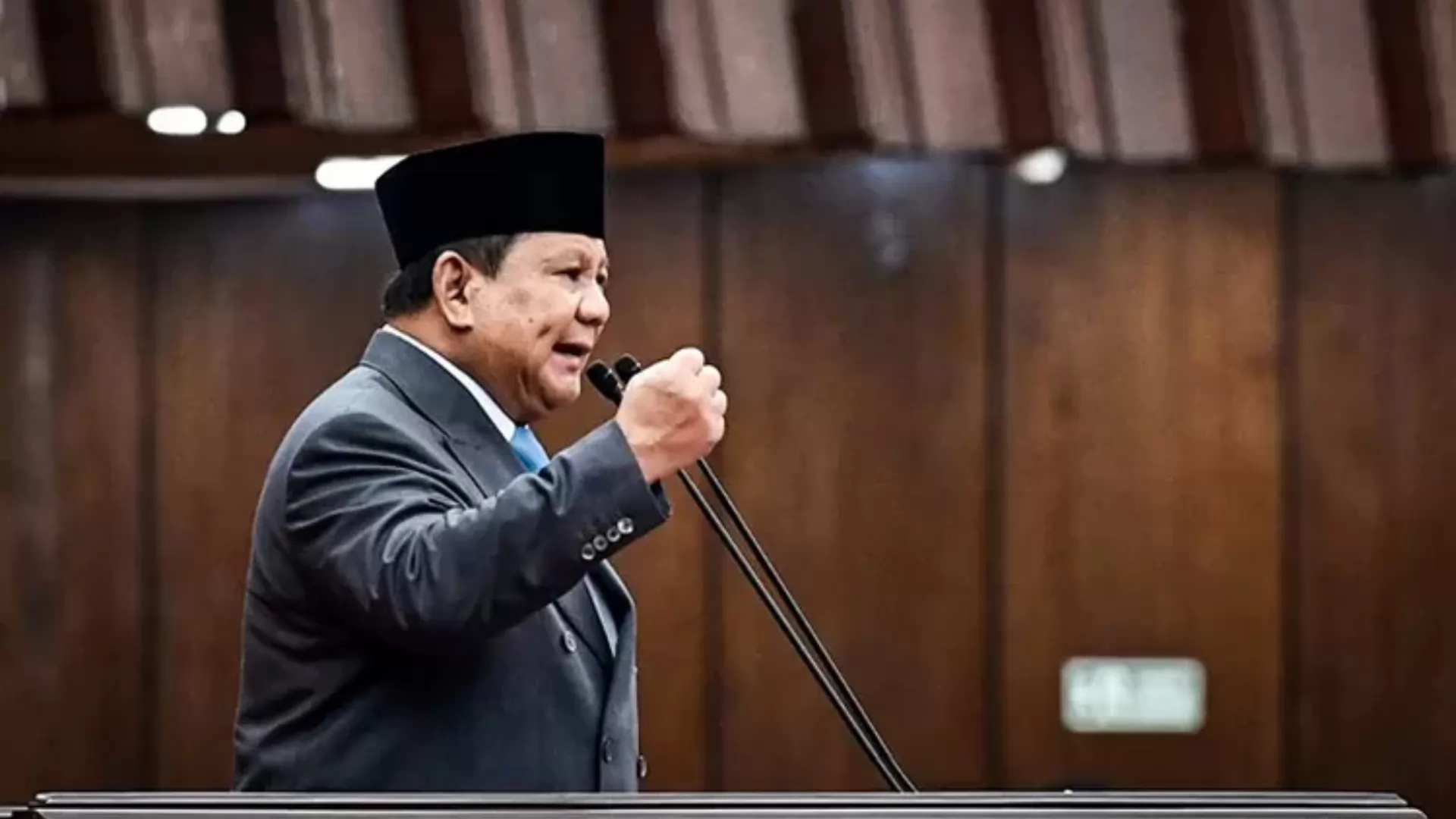
Interestingly, amid this fragile fiscal situation, President Prabowo expressed his ambition to reduce the deficit to the smallest level possible, ideally reaching zero by 2027–2028. “We want to minimize the deficit. It is my dream that one day—whether in 2027 or 2028—I can stand before this assembly and announce that Indonesia has achieved a budget without any deficit,” Prabowo stated at the Parliament Complex on Friday (August 15, 2025). However, the heavy burden of interest payments, weak tax revenue, and ambitious spending needs make this dream far from reality, especially as Indonesia’s tax ratio remains stuck at 10–11% of GDP.
Finance Minister Sri Mulyani highlighted that the government will first focus on the 2026 budget implementation before considering a zero-deficit target in later years. “For a balanced budget in 2–3 years, let’s first look at 2026. We shouldn’t think too far ahead before implementing 2026. However, the president has made his direction clear, and we will prepare accordingly, step by step,” she explained. She also noted that the Finance Ministry must still closely monitor the execution of the 2025 budget while preparing the 2026 draft. Nevertheless, she assured that strategies for achieving a balanced or even surplus budget would continue to be studied.
Meanwhile, Yusuf Rendy Manilet, an economist at CORE Indonesia, argued that achieving a zero deficit is no easy task. He said one approach is to optimize tax revenues, which may require imposing higher taxes on citizens. However, such a move is politically unpopular. “Are people ready to pay more taxes just to achieve a 0% deficit? If taxes increase without improved welfare, it will be very difficult to accept,” he explained.
Yusuf also pointed out that recent strong growth in tax collections has come mainly from service sectors with relatively small contributions, while major contributors like manufacturing and trade have shown weaker growth. This, he concluded, makes achieving a zero-deficit budget even more challenging.
Source: bisnis.com
What do you think about this topic? Tell us what you think. Don't forget to follow Digivestasi's Instagram, TikTok, Youtube accounts to keep you updated with the latest information about economics, finance, digital technology and digital asset investment.
DISCLAIMER
All information contained on our website is summarized from reliable sources and published in good faith and for the purpose of providing general information only. Any action taken by readers on information from this site is their own responsibility.
SHARE
VIEW


