






Saham News
Bareksa Analysts Pick PSAB and BBCA, Here's Their Outlook for the IHSG
/index.php
Bisnis | Ekonomi - Posted on 27 March 2026 Reading time 5 minutes
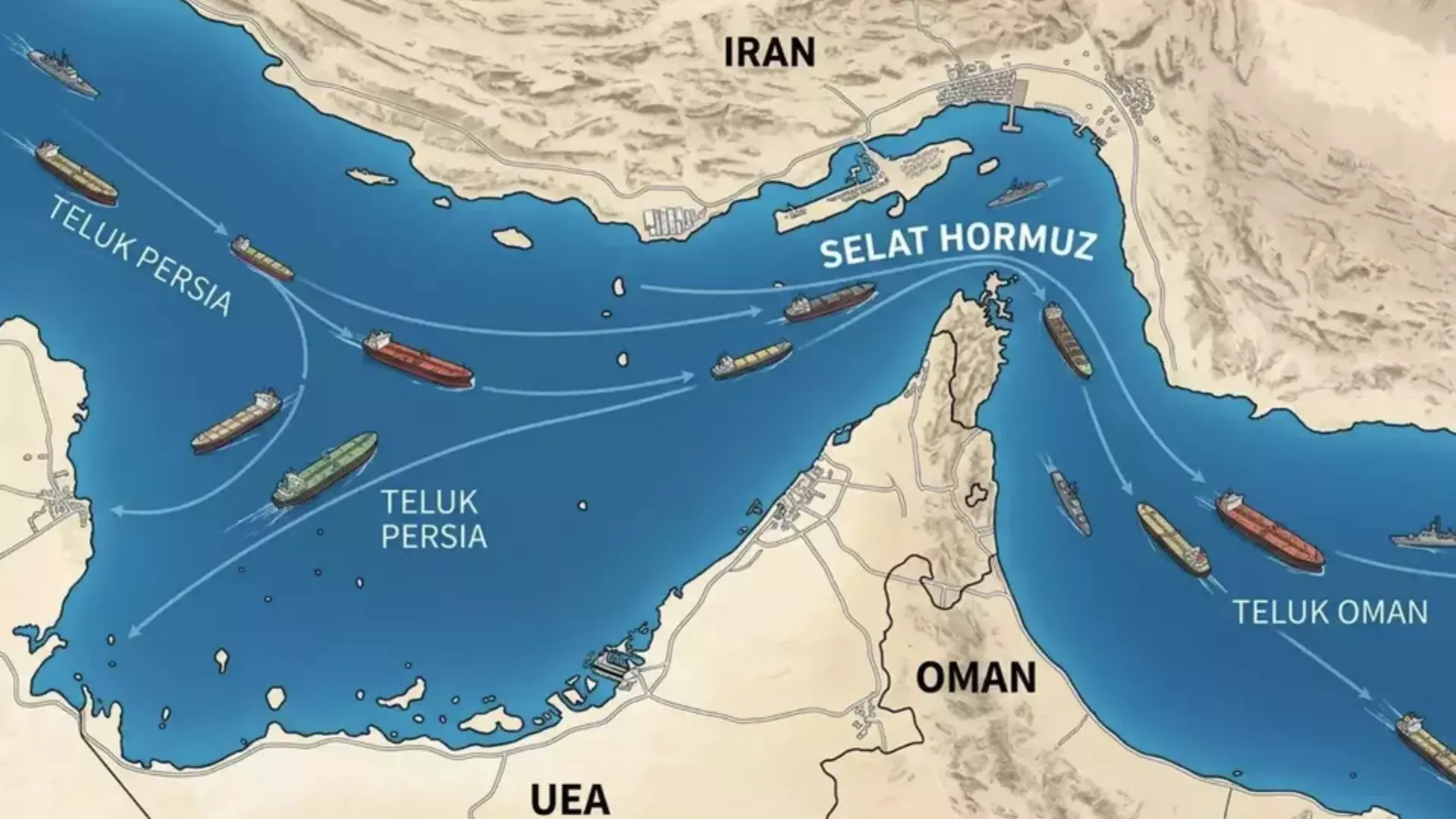
A Malaysian oil tanker has been granted permission by the Iranian government to pass through the Strait of Hormuz, as stated by Prime Minister Anwar Ibrahim.
“We are currently in the process of releasing the Malaysian oil tanker along with its crew so they can continue their journey home,” Anwar said in a special address broadcast live on national television on Thursday (March 26), as reported by Bernama.
In his statement, Anwar also expressed gratitude to Iranian President Masoud Pezeshkian for allowing the Malaysian tanker to transit the strait.
He added that the blockade of the Strait of Hormuz and disruptions to global oil and gas supplies could affect Malaysia. However, he emphasized that Malaysia remains in a relatively stable position thanks to the capability of its national energy company, Petronas, in managing supply and maintaining energy stability.
In addition to Malaysia, a Thai oil tanker also managed to safely pass through the strait. This was achieved through diplomatic coordination between Thailand and Iran, according to Thai Foreign Minister Sihasak Phuangketkeow.
Sihasak explained that the tanker owned by Bangchak Corporation crossed the strait on Monday (March 23) following discussions with Iran’s ambassador to Thailand, Nasereddin Heydari.
He noted that he had requested assistance to ensure safe passage for Thai vessels, to which Iran responded positively and asked for a list of ships intending to transit the area.
The safe passage of the Thai tanker occurred two weeks after a Thailand-flagged vessel, Mayuree Naree, was hit by a projectile in the same region.
Regarding access, Iranian Foreign Minister Abbas Araghchi clarified that the Strait of Hormuz is not entirely closed. He stated that many countries and shipowners have contacted Iran to request guarantees for safe navigation.
He further explained that for countries considered friendly, or in certain necessary cases, Iran’s armed forces have provided escort services to ensure safe passage. Countries such as China, Russia, Pakistan, Iraq, and India have coordinated with Iran, including Indian vessels that recently transited the strait.
Shipping data from Kpler shows that only 99 vessels passed through the strait this month, averaging five to six ships per day. This is significantly lower than pre-war levels, when around 138 ships crossed daily, according to the Joint Maritime Information Centre. The route typically carries about one-fifth of global oil supply.
BBC analysis indicates that roughly one-third of recent transits involve vessels linked to Iran, including 14 Iranian-flagged ships and others under sanctions due to suspected involvement in Tehran’s oil trade. Additionally, nine ships are owned by companies based in China, while six are destined for India.
Some vessels have also opted for longer routes than usual. Tracking data shows a Pakistan-flagged tanker sailed closer to Iran’s coastline on March 15 instead of taking the central shipping lane.
Araghchi also emphasized that vessels associated with enemy states or parties involved in the conflict would not be permitted to pass. He specifically mentioned ships from the United States, Israel, and certain Gulf countries would be denied access.
“We are in a state of war. This region is a war zone, and there is no reason to allow enemy ships and their allies to transit. However, the strait remains open to others,” he said on Wednesday (March 25).
This stance aligns with a statement from Iran’s representative to the United Nations, which said that “non-hostile” vessels would be allowed to pass as long as they coordinate with Iranian authorities.
Since the beginning of the month, ships from China, India, and Pakistan have successfully crossed the strait. These vessels have increasingly taken northern routes through Iranian waters near Larak Island, allowing closer monitoring by Iranian authorities.
Meanwhile, as of March 26, 2026, two Indonesian tankers—PIS VLCC Pertamina Pride and Gamsunoro—remain stranded in the Arabian Gulf and have not yet been able to pass through the Strait of Hormuz.
MarineTraffic data shows Pertamina Pride located north of Dammam, Saudi Arabia, while Gamsunoro is positioned near the coasts of Kuwait and Iraq.
According to Pertamina International Shipping, Pertamina Pride is carrying cargo for domestic energy needs, while Gamsunoro is transporting cargo for third-party clients.
Company representative Vega Pita stated that the safety of crew and cargo is the top priority and assured that the situation does not disrupt Indonesia’s energy supply, given that Pertamina operates hundreds of vessels.
Indonesia’s Ministry of Foreign Affairs is currently in communication with Iranian authorities to secure permission for the two tankers to transit the strait.
Source: bbc.com
What do you think about this topic? Tell us what you think. Don't forget to follow Digivestasi's Instagram, TikTok, Youtube accounts to keep you updated with the latest information about economics, finance, digital technology and digital asset investment.
DISCLAIMER
All information contained on our website is summarized from reliable sources and published in good faith and for the purpose of providing general information only. Any action taken by readers on information from this site is their own responsibility.
SHARE
VIEW


