





News Update
US Warship Hit by Missile! Why Trump Pulled Troops & What It Means
/index.php
Bisnis | Ekonomi - Posted on 17 May 2025 Reading time 5 minutes
The Indonesian rupiah has recently strengthened against the US dollar, driven by market expectations of an interest rate cut by the US Federal Reserve this year, alongside disappointing economic data coming out of the United States.
Roughly two decades ago, in 1998 to be precise, the US dollar reached a similar exchange rate level, standing at around IDR 16,800. However, the situation at that time was far worse, as the dollar surged in a very short period and triggered a wide-reaching political crisis.
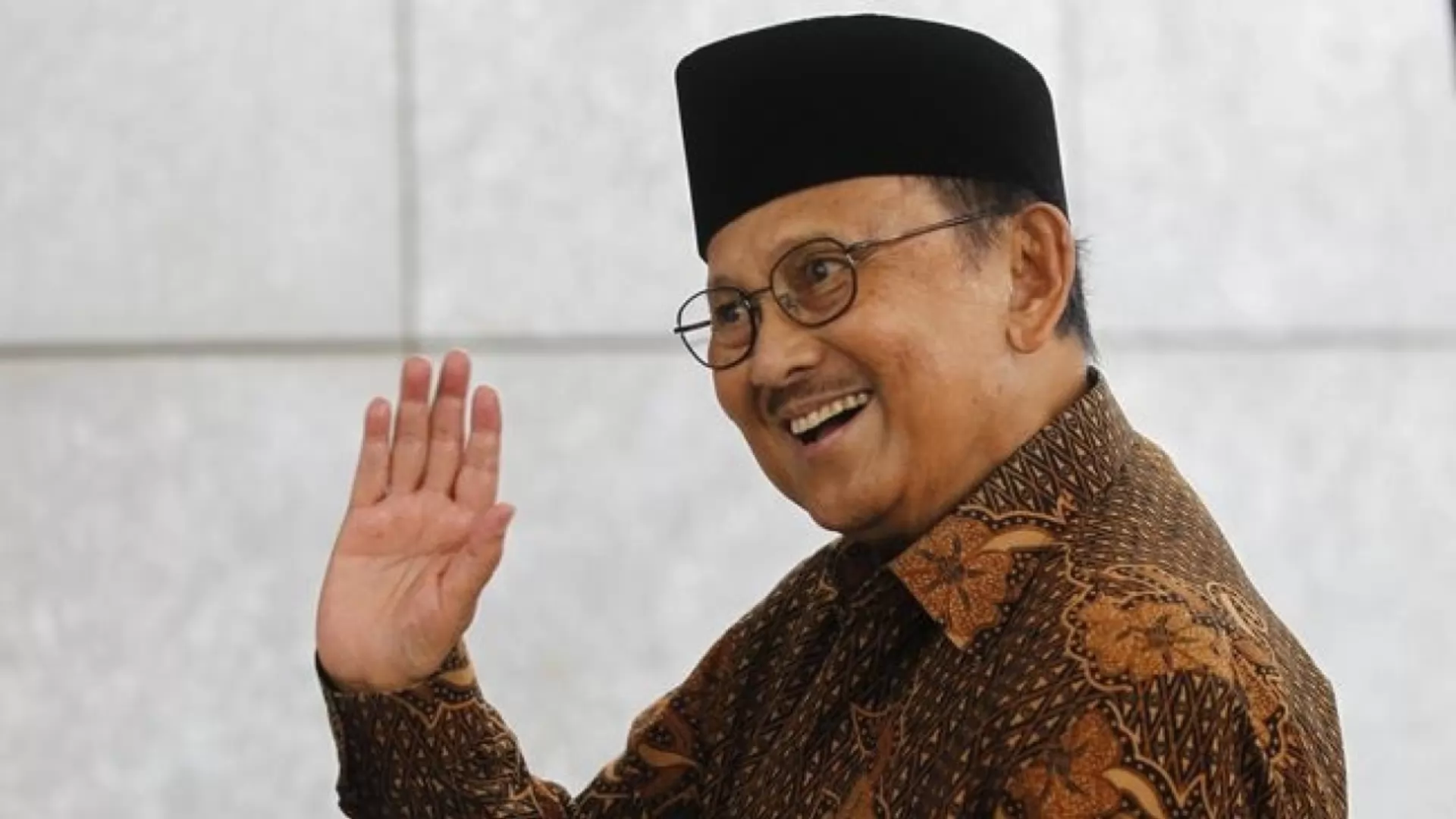
That economic and political turmoil ultimately ended the 32-year rule of President Soeharto. The abrupt leadership transition that followed didn’t immediately restore market confidence, as his successor, B.J. Habibie, was perceived as incapable of solving the economic disaster.
Habibie was not an economist by training. He was known as a technocrat and aircraft engineer, often criticized during the New Order era for wasting public funds on non-essential projects. Additionally, he was still viewed as part of the same authoritarian regime.
Even Singapore’s Prime Minister at the time, Lee Kuan Yew, expressed concern that Habibie’s rise to the presidency would further weaken the rupiah.
But those concerns proved to be unfounded. In reality, Habibie managed to stabilize the Indonesian currency through three key strategies:
Under the New Order regime, the government had made it easier to establish banks through the October 1988 Policy Package. Unfortunately, this deregulation was not supported by improvements in banking governance, leading to the collapse of many banks during the financial crisis and a massive wave of fund withdrawals by customers.
Habibie addressed this issue head-on by launching a comprehensive restructuring of the banking sector and aiming to strengthen Bank Indonesia. One of the major steps he took was repealing the bank deregulation policy and merging four state-owned banks into a single entity: Bank Mandiri.
Moreover, he enacted Law No. 23 of 1999 to separate Bank Indonesia from direct government control. In his autobiography B.J. Habibie: Detik-detik yang Menentukan (2006), Habibie described this move as one of the most effective in stabilizing the rupiah. The central bank had to be independent, impartial, and free from political interference.
To combat the crisis, Habibie implemented a tight monetary policy, notably through the issuance of Bank Indonesia Certificates (SBI), which carried high interest rates. The goal was to rebuild public trust in the banking system. With banks offering high returns, people would be more likely to deposit money, thus reducing the volume of cash circulating in the economy.
Habibie, who hailed from Sulawesi, claimed this strategy was a success. Thanks to the SBI, interest rates fell dramatically from 60% to around the mid-teens. As a result, trust in the banking sector began to return.
Habibie viewed access to affordable basic necessities as crucial during the crisis. Therefore, he decided to maintain government subsidies on electricity and fuel, ensuring that food prices remained stable for the general population.
This policy, however, was not without controversy. In one of his speeches, Habibie made an unusual suggestion, urging Indonesians to fast on Mondays and Thursdays as a way to save money during hard times.
“During the crisis when Habibie became president, he advised people to fast on Mondays and Thursdays,” wrote A. Makmur Makka in the biography Inspirasi Habibie (2020).
Ultimately, these three measures succeeded in restoring market confidence in Indonesia’s economy. Foreign investment returned, and most importantly, the US dollar exchange rate fell back to a stable level of around IDR 6,550.
Source: cnbcindonesia.com
What do you think about this topic? Tell us what you think. Don't forget to follow Digivestasi's Instagram, TikTok, Youtube accounts to keep you updated with the latest information about economics, finance, digital technology and digital asset investment.
DISCLAIMER
All information contained on our website is summarized from reliable sources and published in good faith and for the purpose of providing general information only. Any action taken by readers on information from this site is their own responsibility.
SHARE
VIEW


