


Crypto News
Revealed! Who Owns the Most Bitcoin in 2026? Shocking Data & Top Holders List
/index.php
Bisnis | Ekonomi - Posted on 29 June 2025 Reading time 5 minutes
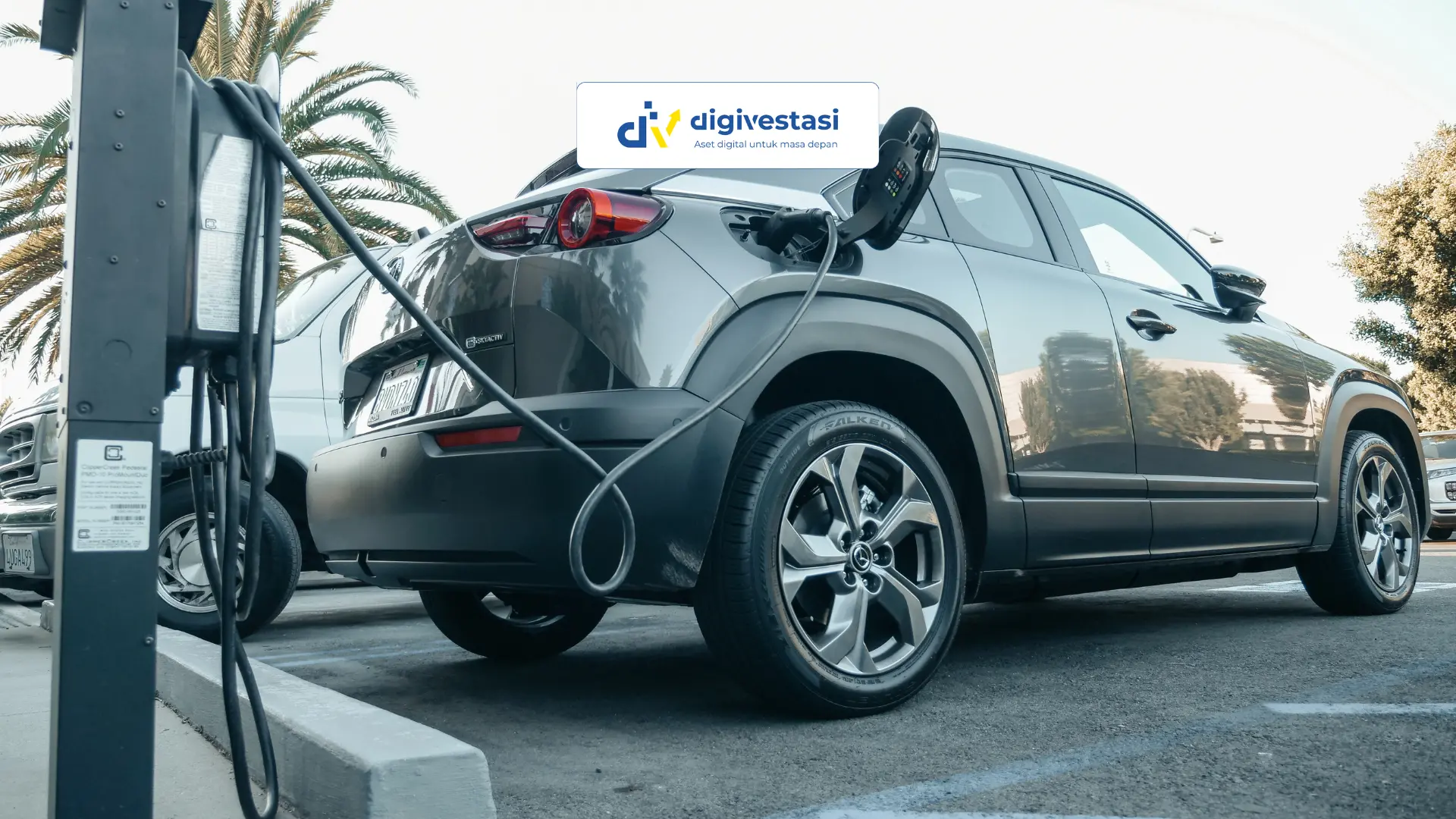
The Minister of Energy and Mineral Resources, Bahlil Lahadalia, stated that electric vehicle (EV) batteries produced by CATL through the Dragon Project in Indonesia have the capacity to power approximately 300,000 EV units.
He explained that the newly inaugurated CATL battery cell plant in Karawang, West Java, is designed to reach a final production capacity of 15 gigawatts (GW).
“If we convert this to the number of cars, it would equate to around 250,000 to 300,000 vehicles,” he said during the groundbreaking ceremony for the integrated battery ecosystem project led by IBC, Antam, and CBL in Karawang on Sunday (June 29, 2025).
In addition to producing batteries for EVs, Bahlil mentioned that the government is currently persuading CATL to also manufacture energy storage systems for solar panels. So far, CATL—the world’s largest battery producer from China—has agreed to the proposal.
In aggregate, Bahlil disclosed that the total investment value of the integrated battery ecosystem involving CATL entities in Indonesia amounts to around US$6 billion, approximately Rp97.07 trillion based on the current exchange rate.
“This is not a small amount, and the project is expected to generate about 35,000 indirect jobs and 8,000 direct jobs,” Bahlil added.
Bahlil further claimed that the Dragon Project would create a multiplier effect on Indonesia’s economy, estimated at US$45 billion per year, or about Rp728.09 trillion under current currency assumptions.
“And each year, when prices rise, the multiplier effect also increases,” he noted.
To ensure broader benefits, Bahlil urged Chinese investors in the Dragon Project to collaborate with local businesses in areas like contracting, logistics, procurement, and fuel supply.
In this way, the economic gains from the massive battery ecosystem project would not only benefit the central government and foreign investors but also local entrepreneurs, communities, and regional administrations.
In the same event, President Prabowo Subianto expressed that the development of this integrated battery ecosystem is expected to be a key step toward achieving energy self-sufficiency.
He set a national target for Indonesia to achieve energy independence within the next 5 to 7 years.
“One of the ways to reach energy independence is through electricity—particularly from solar power. And the key to solar energy is batteries. Today, we witnessed a facility capable of producing 15 gigawatts [GW], as was just reported,” said Prabowo.
The President also emphasized the need to develop more factories involved in similar downstream industrialization to support the energy independence goal.
Experts have informed him that Indonesia would need at least 100 GW of electricity to achieve full energy self-sufficiency.
“This likely means the project will have to be scaled up, possibly doubled. And I believe we are capable of doing so,” he asserted confidently.
Prabowo also extended his appreciation to CATL and the Chinese government for their contribution to the project.
“My congratulations to all parties involved, and thank you to our partners from CATL and China. I believe this collaboration is highly valuable and mutually beneficial. While the world faces conflict, our region remains peaceful,” he emphasized.
The Dragon Project, in partnership with CATL entities, consists of six projects—five upstream and midstream projects located in East Halmahera, North Maluku, and one downstream project based in Karawang, West Java.
This large-scale investment from China’s battery giant is conducted through Ningbo Contemporary Brunp Lygend Co. Ltd. (CBL), a joint venture between Brunp and Lygend, both experts in processing raw materials for batteries.
From the Indonesian side, participation is represented by the Indonesia Battery Corporation (IBC), which includes several state-owned enterprises (SOEs) in its consortium.
IBC's shareholding structure includes: PT Aneka Tambang Tbk (Antam) at 26.7%, PT Indonesia Asahan Aluminium (Inalum) at 26.7%, PT PLN (Persero) at 19.9%, and PT Pertamina New & Renewable Energy at 26.7%.
The project is executed through a series of joint ventures (JVs) encompassing three industrial phases: upstream (mining), midstream (smelters for cathodes, anodes, and precursors), and downstream (battery production and recycling).
In the upstream sector, IBC and CBL established three JV entities, including PT Sumber Daya Arindo (SDA) for nickel mining. Antam holds 51% of SDA shares, while the remaining portion belongs to Hongkong CBL Limited (HKCBL).
In addition, PT Feni Haltim (PFT) is tasked with developing a rotary kiln electric furnace (RKEF)-based pyrometallurgical facility and an industrial zone in East Halmahera, with Antam owning 40% of the shares.
For hydrometallurgical processing (high pressure acid leach/HPAL), Antam holds 30% ownership.
In the midstream to downstream segments, IBC plays a key role in battery raw material processing, cell assembly, and recycling management, holding 30% shares in battery production and 40% in recycling operations.
However, the structure suggests that Indonesia holds a minority stake in the manufacturing segment.
Source: bloombergtechnoz.com
What do you think about this topic? Tell us what you think. Don't forget to follow Digivestasi's Instagram, TikTok, Youtube accounts to keep you updated with the latest information about economics, finance, digital technology and digital asset investment.
DISCLAIMER
All information contained on our website is summarized from reliable sources and published in good faith and for the purpose of providing general information only. Any action taken by readers on information from this site is their own responsibility.
SHARE
VIEW


